
© 2026 Monument Traders Alliance, LLC

For years, investors have watched videos of humanoid robots walking, dancing, carrying boxes, and occasionally falling flat on their faces.
The technology was fascinating. The investment opportunity was enormous. But there was one big problem: Most of the companies developing these robots were privately held.
That changes today.
Agility Robotics is expected to begin trading on the Nasdaq this morning under the ticker AGLT, following its merger with Churchill Capital Corp XI (CCXI).
And unlike many of the futuristic robots we’ve seen on social media, this company’s machines are already working in real businesses.
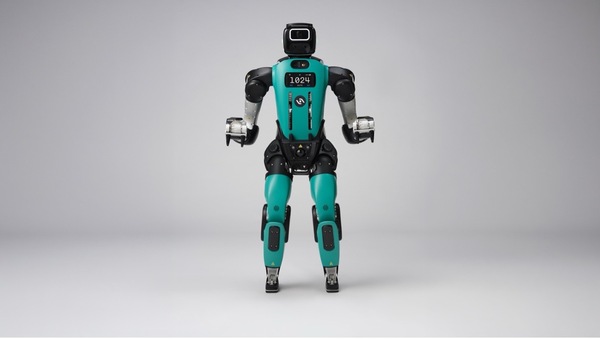
Agility Robotics is an Oregon-based company developing a humanoid robot called Digit. Standing roughly six feet tall, its newest model looks less like a science-fiction character and more like a futuristic warehouse worker.
And that’s exactly the point.
Digit wasn’t designed to dance or perform backflips. It was designed to handle repetitive, physically demanding jobs that businesses struggle to fill.
 |
At a GXO Logistics (GXO) facility in Georgia, Digit robots have already moved more than 100,000 containers. GXO recently agreed to expand deployments to two additional facilities in North Carolina and Tennessee.
Meanwhile, Toyota Motor Manufacturing Canada (TM), Schaeffler (SFFLY), and other industrial companies are exploring or implementing the technology.
Agility says more than 30 additional prospective customers are evaluating Digit or discussing potential deployments.
These aren’t all paying customers yet. But the growing interest tells us something important: Businesses are beginning to see humanoid robots as practical tools rather than expensive experiments.
Here’s what I find especially interesting about Digit’s newest generation.
Digit 5 can lift approximately 50 pounds, operate for 90 minutes, and recharge in just nine minutes. Agility designed it to potentially work more than 20 productive hours in a 24-hour period.
But the biggest breakthrough might be something less glamorous.
Safety.
Earlier versions needed to operate behind barriers separating them from human workers. Digit 5 is being engineered to work safely in closer proximity to people.
That’s a major step toward making humanoid robots useful in ordinary factories and warehouses.
After all, a robot that can lift boxes is interesting. A robot that can safely work alongside people, move through existing buildings, and operate economically is potentially transformational.
Agility is entering the public market through a SPAC merger that originally valued the company at approximately $2.5 billion.
The transaction is expected to provide roughly $465 million in gross capital, giving Agility additional resources to expand manufacturing and commercial deployments.
The company has also announced more than $300 million in committed multiyear orders for Digit 5.
Those orders aren’t current revenue, and fulfilling them will depend on production, product performance, and contractual milestones. Still, they represent meaningful commercial interest in an industry that many investors continue to dismiss as science fiction.
Orders like these are one of the first things I look for. Purchase orders, hiring trends, even satellite photos of new factories going up can tell you where a company is headed long before it shows up in earnings.
Agility’s Oregon manufacturing facility is designed to eventually produce as many as 10,000 robots annually.
Now, consider what could happen if humanoid robotics follows the adoption curve we’ve seen with other breakthrough technologies.
The first industrial robot, a one-armed machine called Unimate, went to work at a General Motors (GM) plant in 1961. For decades, adoption crawled. The machines were expensive, bolted to the floor, and caged off from human workers. Factories had to be built around them.
Then costs fell, the technology improved, and the curve bent upward. Last year, a record 5 million industrial robots were operating in factories worldwide, more than double the number just seven years earlier.
Humanoid robots could follow a similar path, with one big advantage: They’re designed to fit the world we already have. They walk the same aisles and reach the same shelves as human workers. And with Digit 5, Agility is engineering them to work without the cages that held back earlier robots.
Even at full capacity, Agility’s factory would turn out 10,000 robots a year. That’s a small fraction of the more than 600,000 industrial robots installed last year alone.
In other words, we’re still at the bottom of the curve.
I’ve been saying for months that artificial intelligence is leaving the data center.
The first AI revolution gave machines the ability to understand language, recognize images, and generate information. The next revolution is giving intelligent machines the ability to interact with the physical world.
Factories. Warehouses. Hospitals. Construction sites. Eventually, our homes.
The opportunity is enormous, but the risks are real. Robots must become cheaper, more reliable, and easier to deploy. And newly public stocks, particularly those emerging from SPAC mergers, can experience tremendous volatility.
I’m not suggesting investors rush out and buy AGLT on its first trading day.
But I do believe this listing represents an important milestone in the evolution of robotics.
For years, humanoid robots were something we watched in videos. Now they’re moving containers, attracting commercial orders, and entering the public markets.
The robots are getting to work. And Wall Street is finally getting a front-row seat.
